Materials
PUR edge banding
Edge banding is the thin strip that covers the cut edge of a board. It hides the core and keeps moisture out. The glue that holds it on decides how long it lasts.
The common problem
Why carpentry peels and swells
Most of the complaints we hear about old cabinets come down to three things.
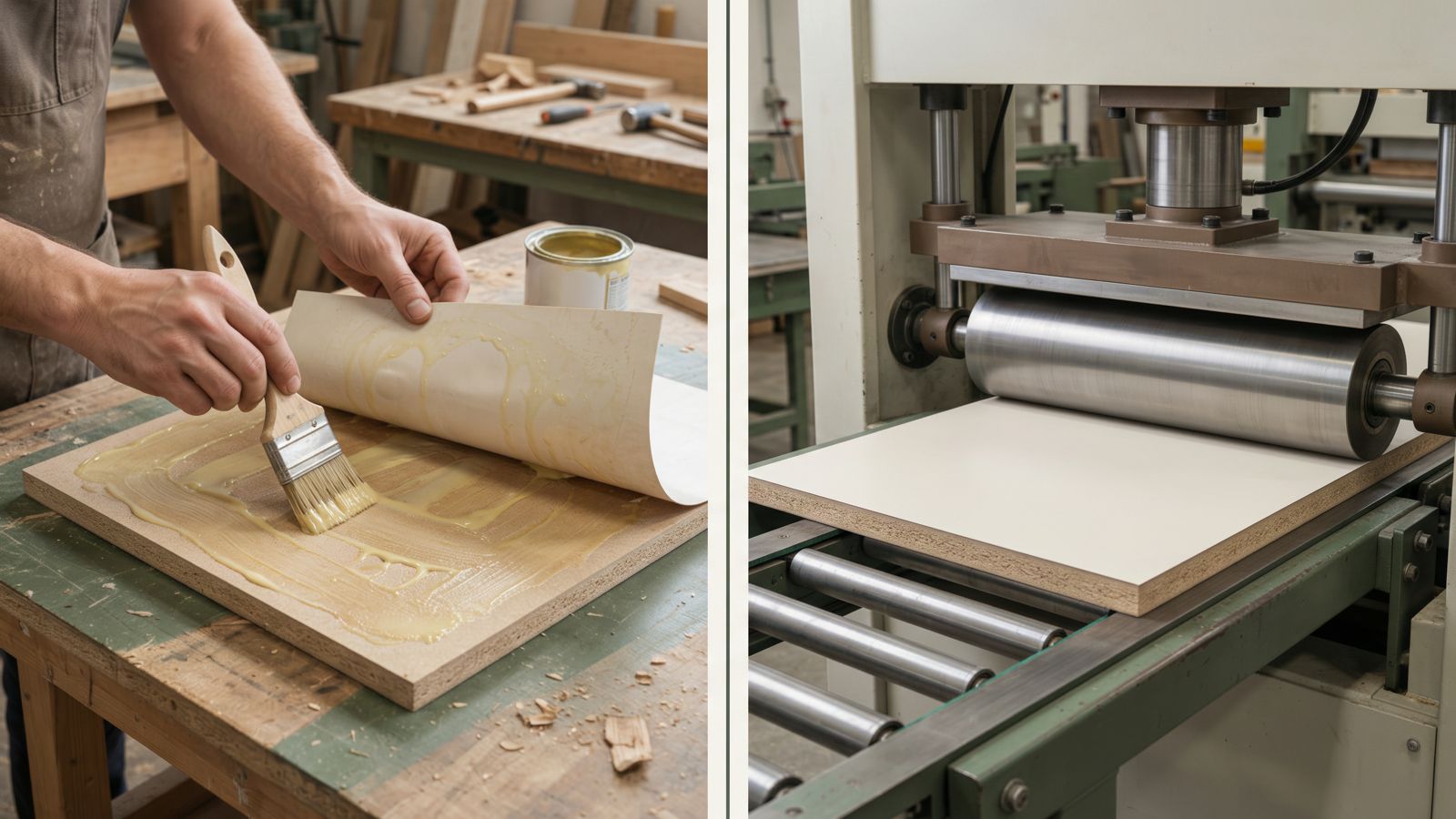
Surfaces glued on by hand
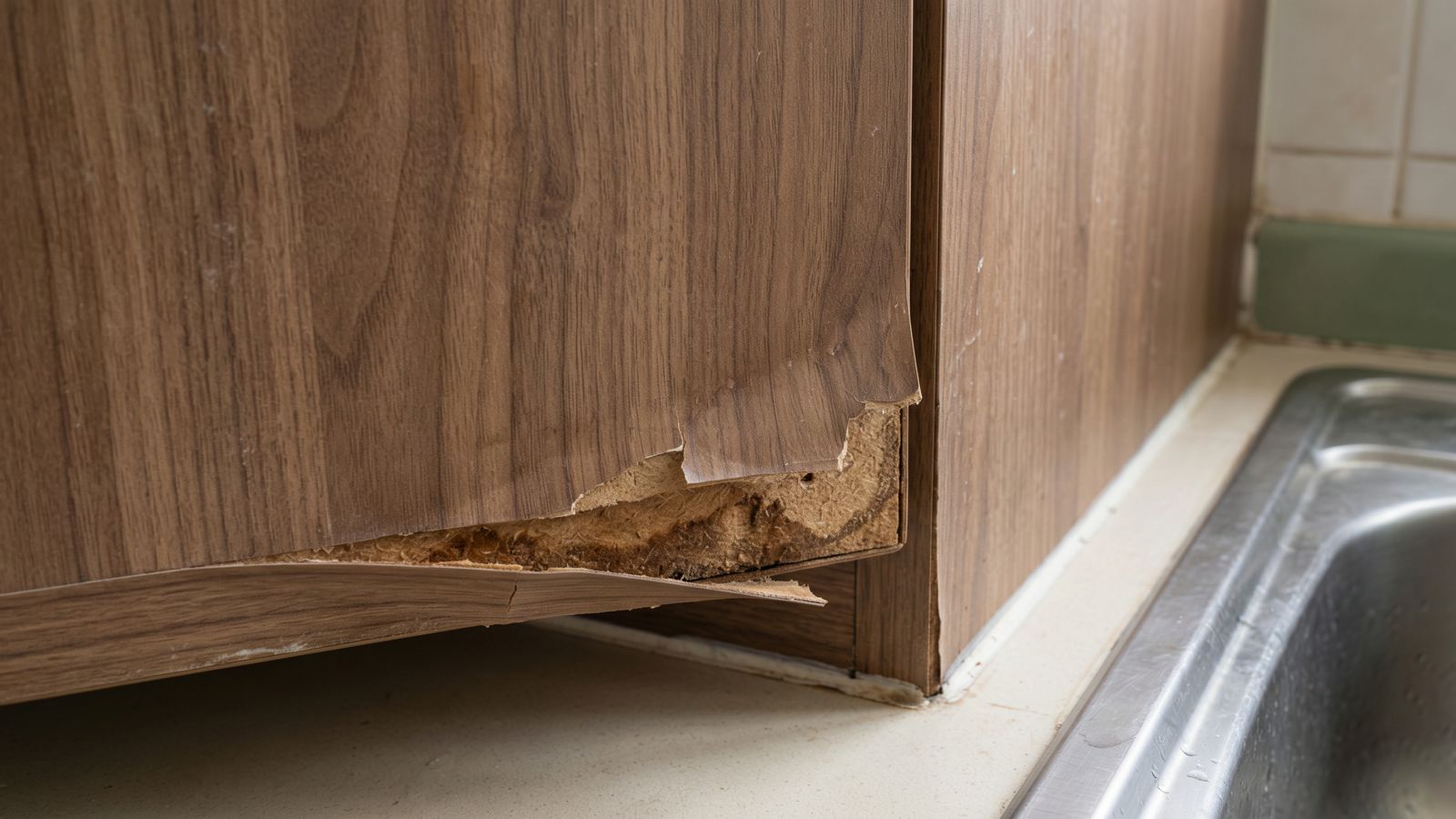
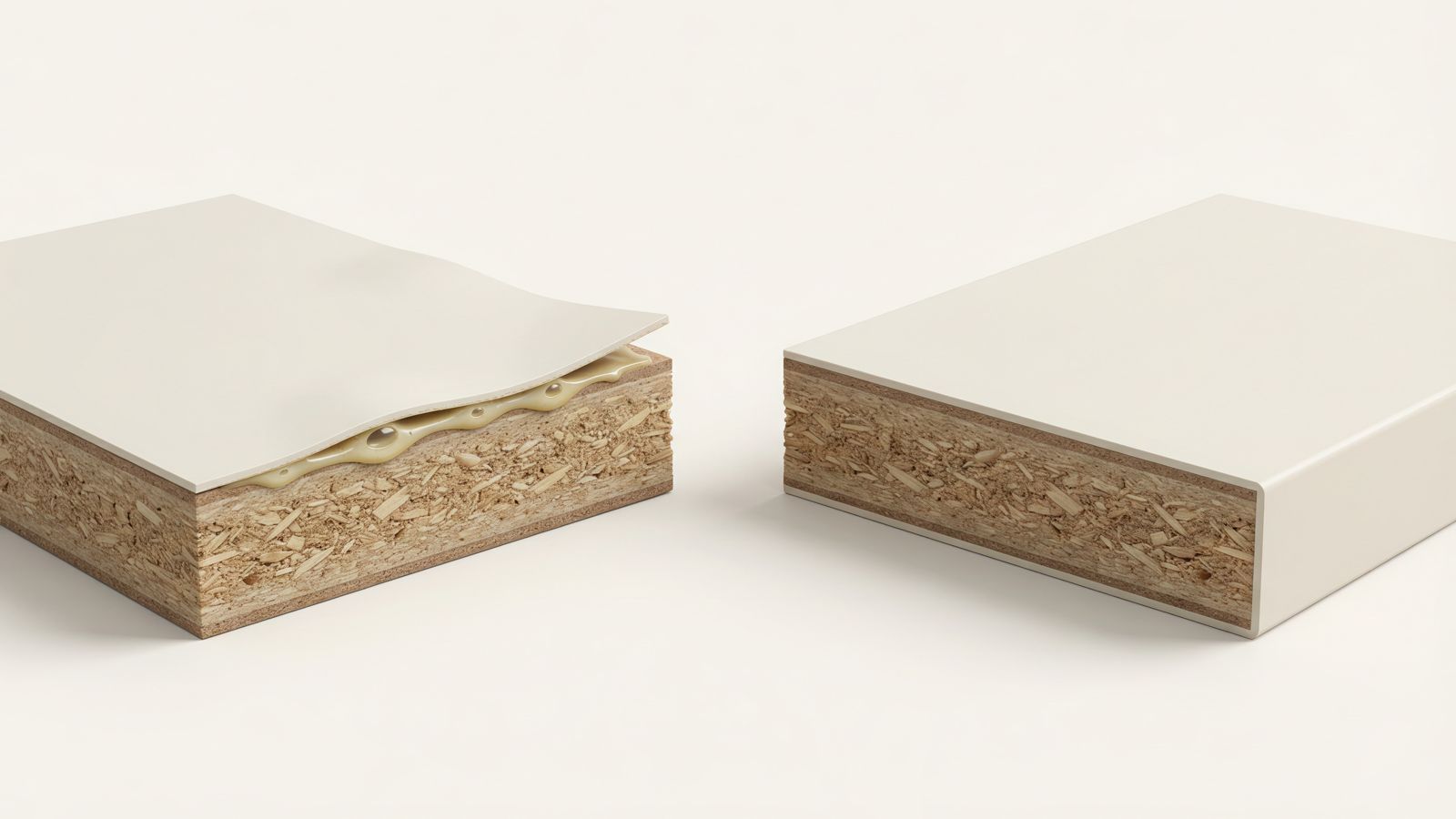
Sheets brushed with contact glue and pressed by hand can trap air and leave uneven glue. In humid weather they start to bubble and lift.
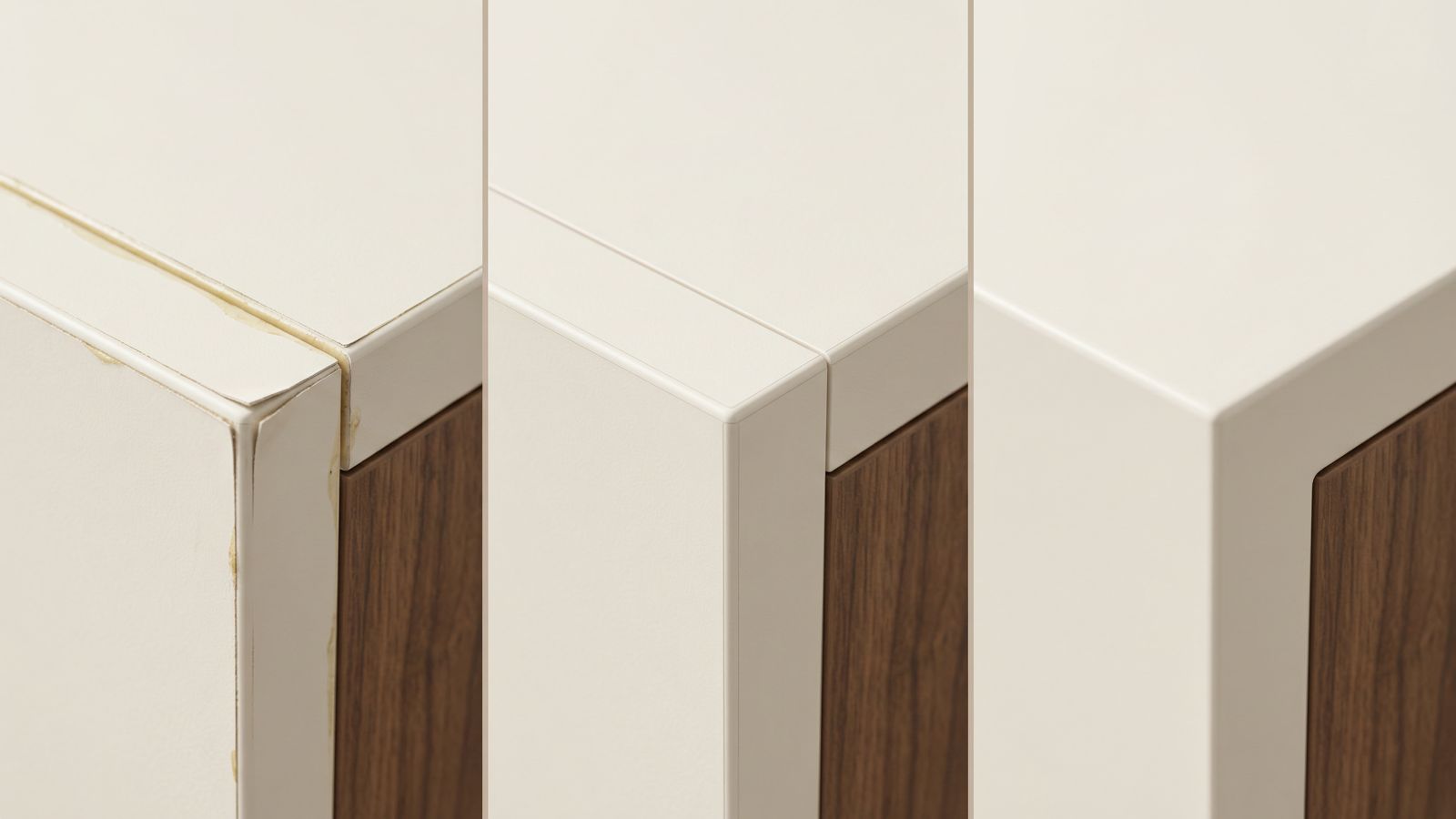
Edge glue that softens
Ordinary hot-melt edge glue softens with heat. Next to a hob, oven or kettle, the edge strip can creep, yellow and come loose.
Edges that let water in
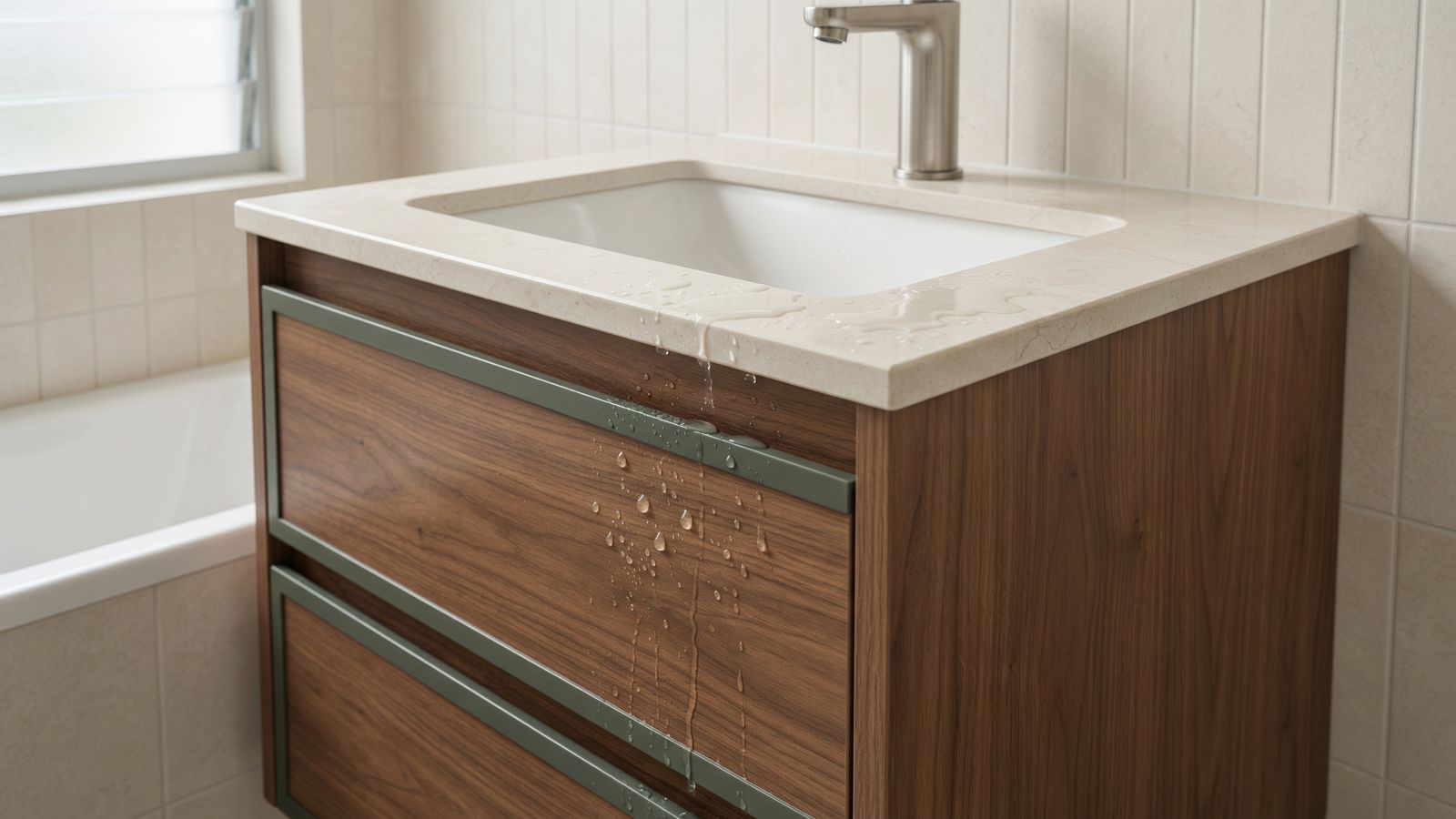
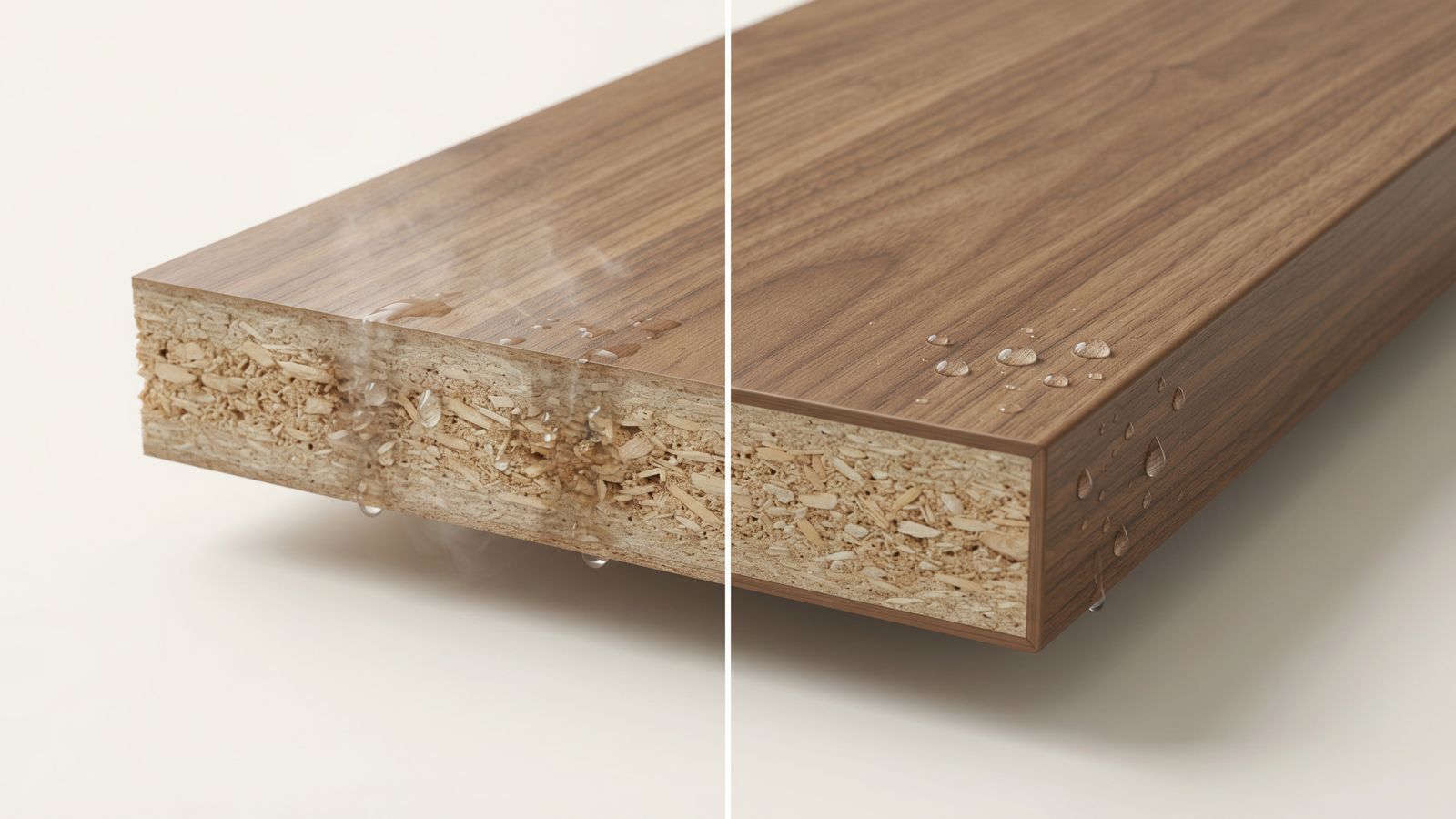
Once water gets past a gap at the edge, the board core soaks it up and swells. Sink cabinets and vanities are usually the first to go.
How we avoid it
Pressed, sealed, and kept dry inside
Machine-pressed melamine
The surface is fused to the board under heat and pressure, evenly, with no hand gluing.
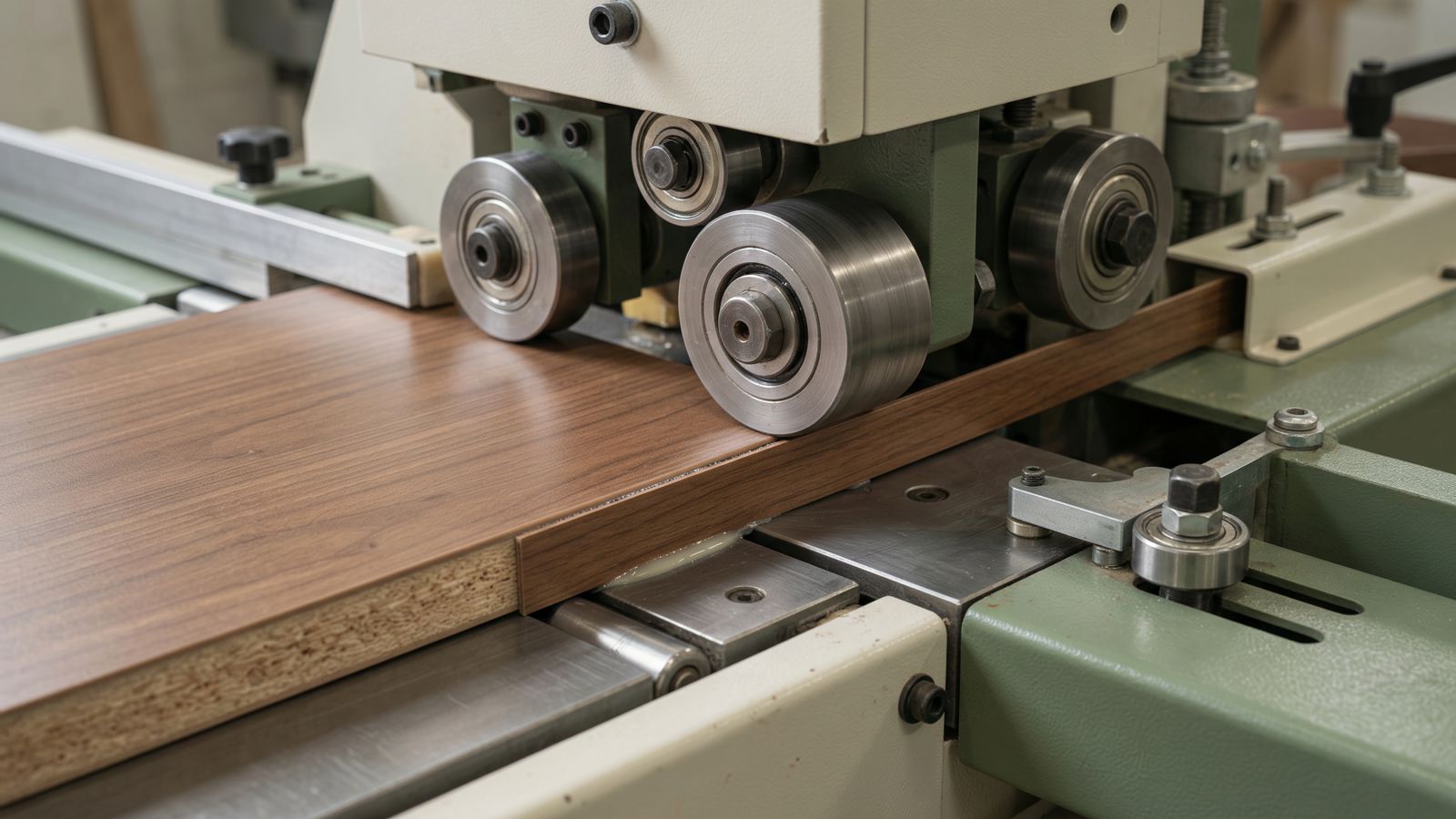
PUR edge seal
The glue cures with moisture into a bond that does not melt again with heat.
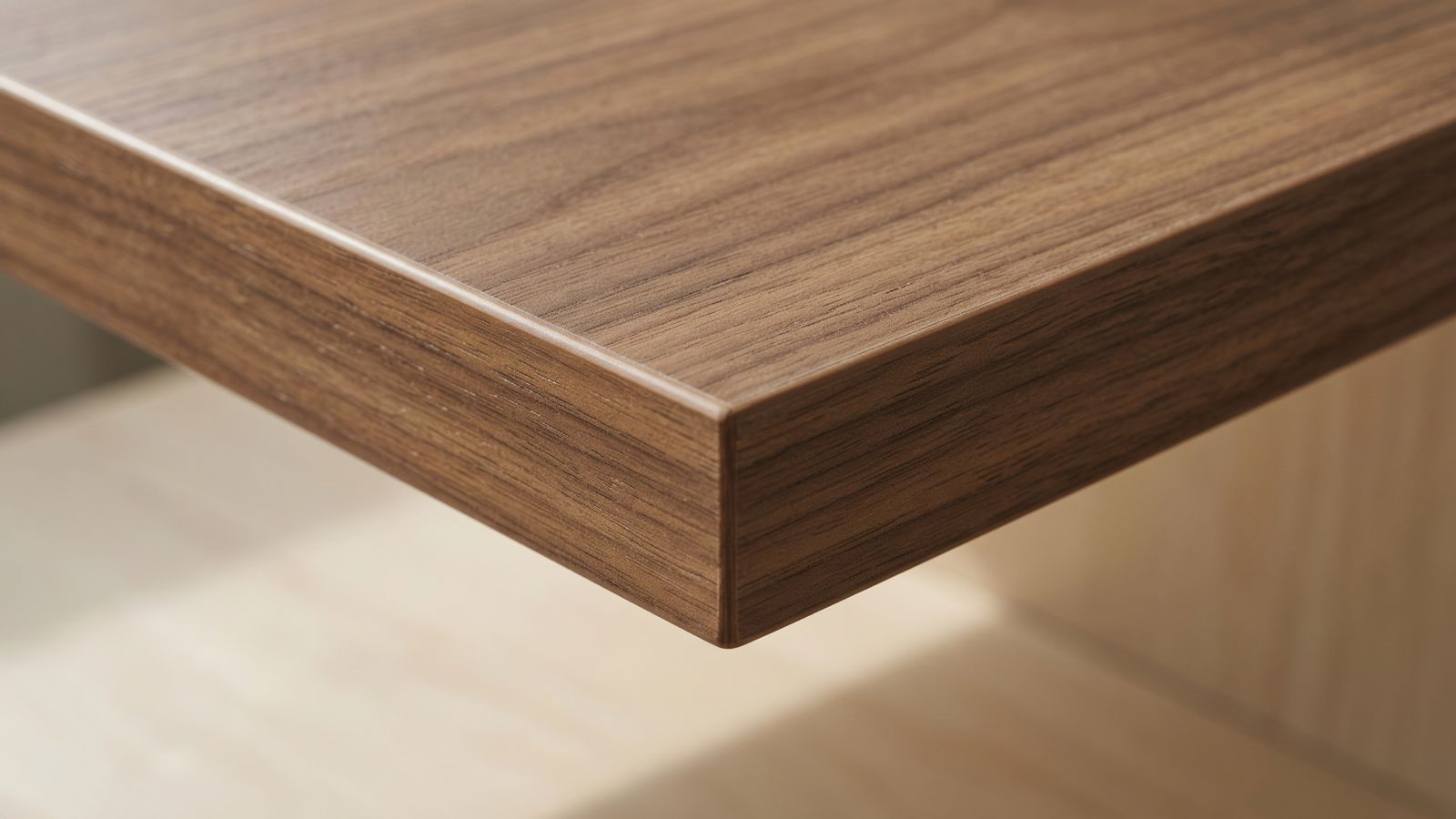
Laser edge on Signature
The edge is joined with no separate glue line to open up over time.
Two glues compared
EVA
Heat-activated glue. It holds well in dry rooms, but it softens with heat and can loosen in damp conditions over time.
PUR
Polyurethane glue. After it is applied, it reacts with moisture in the air and sets into a bond that does not melt again. It handles heat and humidity much better than EVA.
Why it matters in Singapore
Humidity is high most of the year. Kitchen cabinets sit near cooking heat. Bathroom vanities get splashed. A stronger edge seal keeps those edges sealed for longer.
Which tier uses what
- Essential and Select: machine-applied PUR edge banding.
- Signature: HOMAG laser edge, which joins the edge with no visible glue line.
Ask us about the edge
Tell us which tier you are considering and we will confirm the edge used for that quote.