Home / Buyer's guides / Thin backing and flimsy bases: what to look for in a drawer
Buyer's guide, 2026-11-28
Thin backing and flimsy bases: what to look for in a drawer
How do I tell if a drawer is well built?
Measure it. Many local carpenters use thin, cheap plywood on the base and inside the carcass to save cost, so ask for the thickness of the drawer base, back and sides in writing. At Apex, drawer bases and backs are 9mm, sides are 18mm and everything is solid plywood.
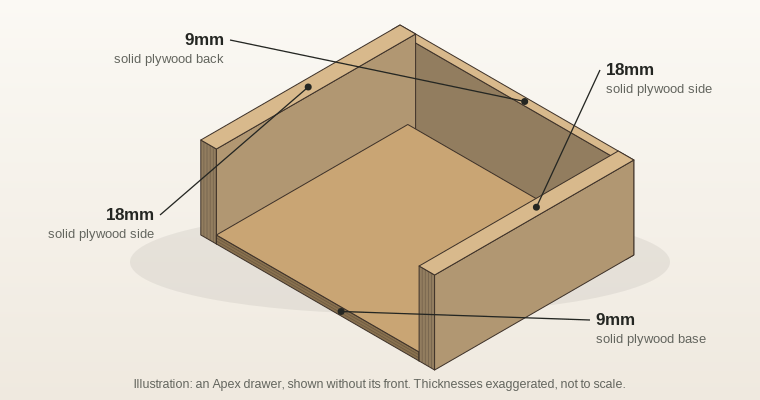
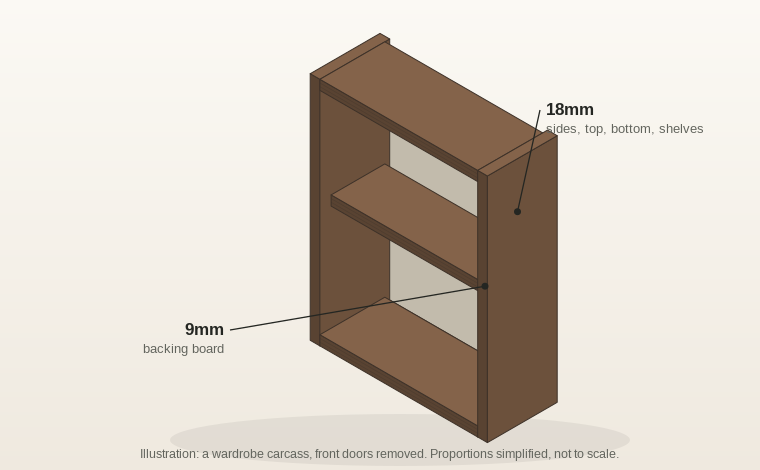
Where does thin board hide?
On the drawer base, the drawer back and the back panel of the cabinet. They are never on show, so they are where a saving is easy to make and hard to see. A drawer for pots, clothes or shoes carries real weight every day.
What does Apex use?
All boards are 18mm. Drawer bases and backs are 9mm and drawer sides are 18mm, all solid plywood. The backing on wardrobes and other cabinets is 9mm.
How do you check?
Pull a drawer out and press on the base. Look at the back panel from inside the wardrobe. Ask for the thickness in millimetres on the quote.
What you can verify
- Drawer base thickness in millimetres
- Drawer back and side thickness
- Material: solid plywood or something thinner
- Backing board thickness
- Everything written on the quote


This guide describes how Apex builds. It makes no claim about any other company's work. Check what matters to you in writing, whoever you choose.